New Zealand's shameful history of child neglect

Almost ten years ago I wrote a post detailing why New Zealand ranked at the bottom of the developed world for child health and welfare. With over 330,000 views, and widely shared, it has become my most read post. When so many were shocked at the time it despairs me that so little has changed despite an awareness of need.
When we look at the global trends for child health and wellbeing, many developed countries are experiencing greater inequity through the continued dominance of neoliberal politics and the rise of the populist right. The fact that New Zealand also reflects that trend and is still ranked 32nd out of 37 high income countries (and the worst in a key indicator), exposes a deepening crisis that deserves immediate attention.
According to UNICEF data this is where New Zealand currently sits in key indicators:
Mental Wellbeing (37th out of 37) We are still firmly at the bottom for what must be the most concerning health statistic. Poor mental health impacts on physical health and restricts an individual's ability to reach their full potential. Our youth suicide rates are worse than a decade ago, they were twice as high as the average, now they are three times. We still have very high rates of bullying and very low self-reported life satisfaction for 15 year olds.
Physical Health (33rd out of 42) Our poor ranking is related to high mortality rates and a third of 2 - 14 year olds being overweight or obese. Sudden unexpected death in infancy (SUDI) is the leading cause of death for Māori and Pacifika babies. NZ has one of the highest rates of rheumatic fever and respiratory illness in the developed world, largely due to poor quality and crowded housing.
Skills and Education (23rd out of 42) In the year 2000, when the OECD first started comparing education systems, NZ was ranked in the top four for attainment in mathematics and reading. Our drop to 23rd has been dramatic. Our most able children still compete with the best, but we have a long tail of underachievement. The gap between our highest achieving to those at the bottom make us one of the most inequitable education systems in the developed world, with socioeconomic factors having a major impact. Māori and Pacifika children especially struggle and learners from ethnic communities encounter widespread racism, isolation, and lack of cultural understanding. 20% of ethnic learners experience race-based bullying.
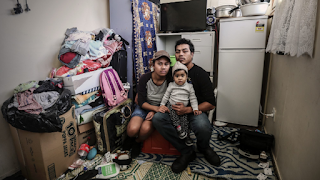
Child poverty is a main contributor to our low ranking for child health and wellbeing. Over the last decade housing costs and lack of supply are still impacting. Over 33,000 children experience severe housing depravation meaning that the houses that they live in are actually uninhabitable and around 200 at any given time are living in cars. 170,000 children (almost 15%) experience material hardship and around 25% of all children live in households where food often runs out. Food deprivation has got worse over the last decade as the cost of food has increased beyond the rate of inflation.
One of the key findings form the internationally regarded Dunedin Longitudinal Study is that socio-economic disadvantage in early life has long-term impacts on mental and physical health. There are economic implications when our workforce is not able to reach its potential, and there are heavy demands on welfare and health systems. Given those facts, one would think that there would be a greater investment in those things that would make the biggest difference to lift children and families out of the poverty cycle.
There are two broad approaches to addressing child health and welfare:
Reactionary (Constantly responding to the symptoms of poverty and poor health in children while maintaining the status quo, the current approach):
- Boot camps for young offenders, keeping the age that children can be held legally responsible for the actions at 10 years and toughening sentences for youth offenders.
- Education changes reject the value of meeting Te Tiriti obligations, cultural identity and introduce a narrow, Eurocentric approach to learning. Demonisation of the teaching profession. Continued underfunding of support for struggling learners.
- Punitive sanctions introduced for benefits, restrictions on benefit eligibility and the minimum wage kept well below the living wage ($5 less and hour).
- Mental health system underfunded.
- A cap on state housing builds and landlords allowed to use 90 day no cause evictions.
- Outsourcing school lunches to the cheapest providers, with the focus on price before quality. Supermarket duopoly continues to rake in huge profits.
- A one size fits all approach to social and welfare services that reject the specific needs of tangata whenua and Pacifika communities.
Progressive (promotes forward-thinking social reform, human rights and political change)
- A greater emphasis on early intervention and family support. Invest in school hubs where teachers, social workers and health nurses can identify needs and implement early and appropriate support.
- Create an education system where resources are more equitably shared. Co-construct a curriculum with the teaching profession that recognises diverse needs, cultural difference and different rates of development. Enhance initial teaching education and in school supports to build teacher capability and professionalism so that individual needs can be effectively addressed.
- Lift benefits and social supports so that families can thrive. The support provided will then be a hand up rather than a poverty trap.
- Greater investment in preventative and primary health systems which will then lessen demand on the more expensive hospital system.
- A much increased investment in state housing. The government is able to build houses at scale much more effectively than the private sector and can more deliberately target need (size and location).
- Greater support for small market gardens, community gardens and local food producers that can support localised affordable systems to break the dominance of the supermarket duopoly. Localised food systems also provide greater resilience when large national suppliers are impacted by bad weather events.
- Invest more in Māori and community led interventions and services that are more able to meet the specific needs of their community.
- Understand that investing in children is also an investment in our future, it is not a cost but ensures that we build our capability to better meet the challenges of the future.
- Overhaul the NZ tax system to ensure greater fairness and an increase in funding to lift our children out of poverty.
A Guardian article in 2016 was titled "New Zealand's shameful secret: we have normalised child poverty", perhaps we have been so desensitised to child poverty and suffering then there is no longer a will to make things better. We even have a level of poverty shaming from this government that reveals a total detachment from the realities of being poor. For a government minister to be publicly comfortable about receiving a tax payer funded $1000 a week housing allowance when living in her own mortgage free home, when 170,000 children are materially deprived, indicates that this is not a government that will ever resolve child poverty.
This election we need to vote for the parties that have the most progressive child centred policies.
This election we need to vote for the parties that have the most progressive child centred policies.


Comments
https://www.nzherald.co.nz/nz/the-rsv-delay-exposing-nzs-child-health-gap/4EAFR4YSTAB5YP54L7DW6K7QBI/